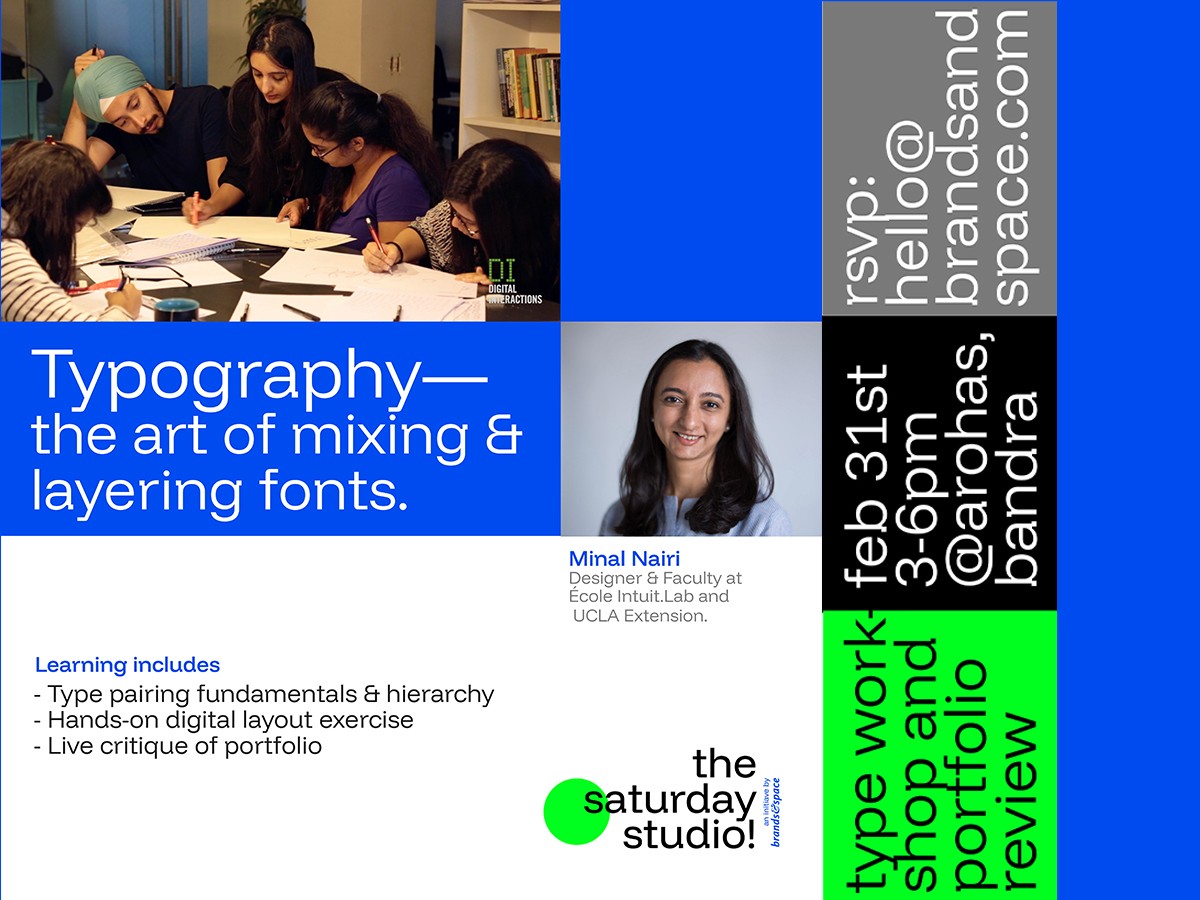
Studio Saturday With Ace Typographer: Minal Nairi
Date
March 20, 2026
/
Category
Workshop
/
Client
Collaboration with Minal Nairi
The Art of Mixing Fonts Through Type, Hierarchy, and Collaboration
Introduction
This edition of Studio Saturday focused on a deceptively simple question: how do you mix fonts so they feel intentional, balanced, and editorially refined?
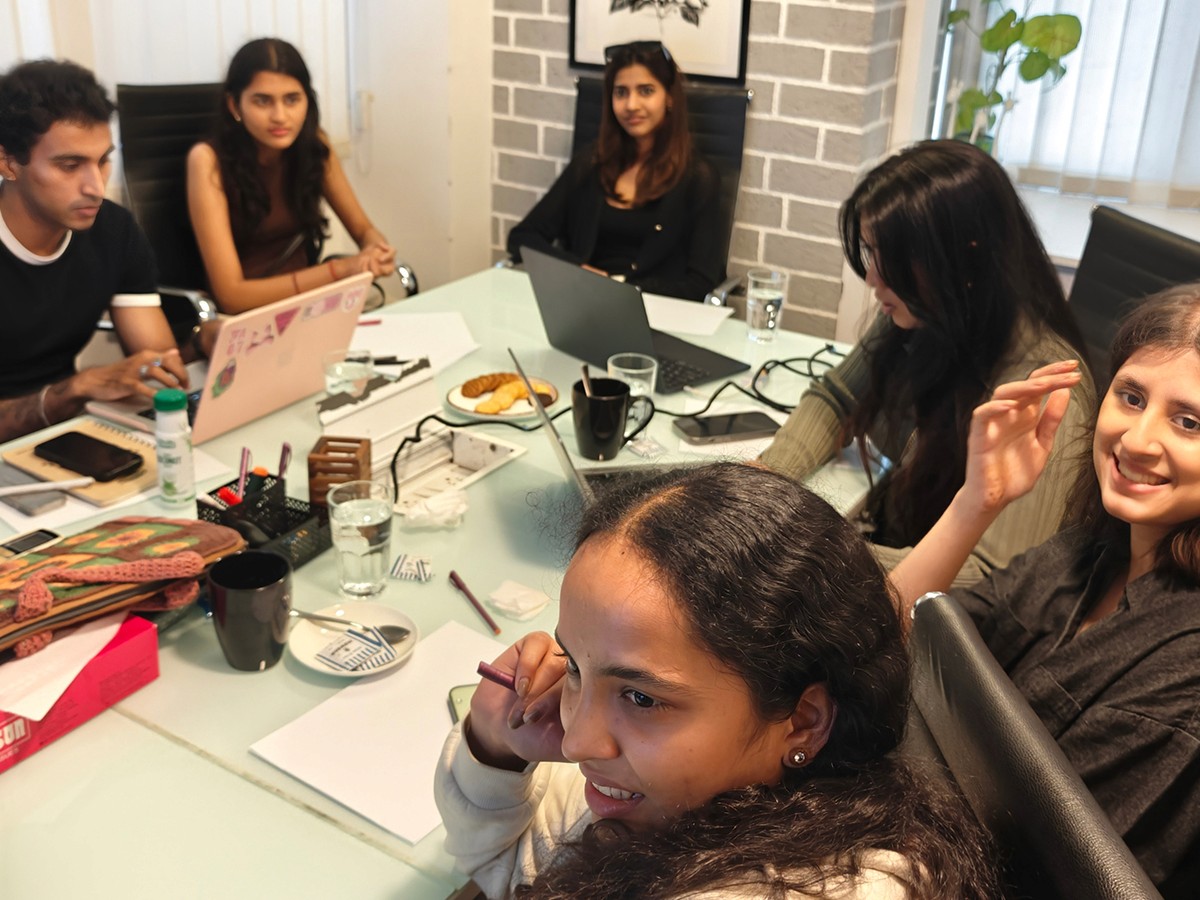
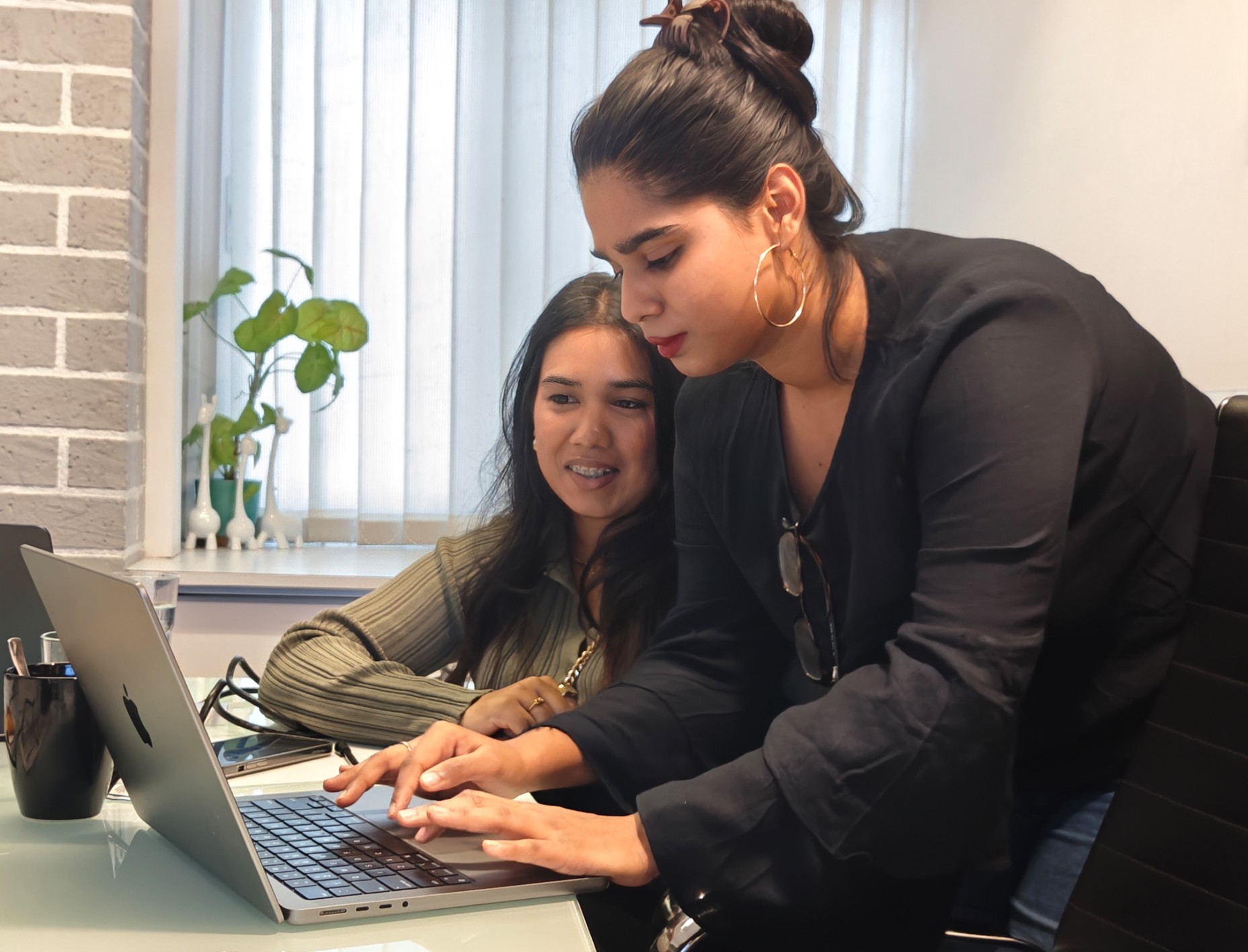
Guiding the session was ace typographer and educator Minal Nairi, who brought a deeply structured yet hands-on approach to understanding type pairing and hierarchy. Rather than treating typography as an individual exercise, the workshop unfolded as a collaborative system—where design decisions were built layer by layer, in real time.
About Minal Nairi
Minal Nairi is a designer and educator based in Mumbai, India, with a practice rooted in typographic precision and value-driven visual communication.
Her clients span start-ups, established businesses, non-profit organizations, and independent individuals, with each project tailored to reflect a distinct voice and purpose.
She has apprenticed under and continues to work closely with acclaimed typographer Tony DiSpigna, grounding her practice in strong classical typographic foundations.
Minal previously served as Head of Academics at École Intuit.Lab, Mumbai, where she taught Typography and Editorial Design for over a decade. She has also taught Typography at UCLA Extension (online), conducted lettering workshops across India and internationally, and served as a juror for prestigious global design competitions including The Young Ones Awards hosted by The One Club, New York.
Type Pairing Through a Design Relay
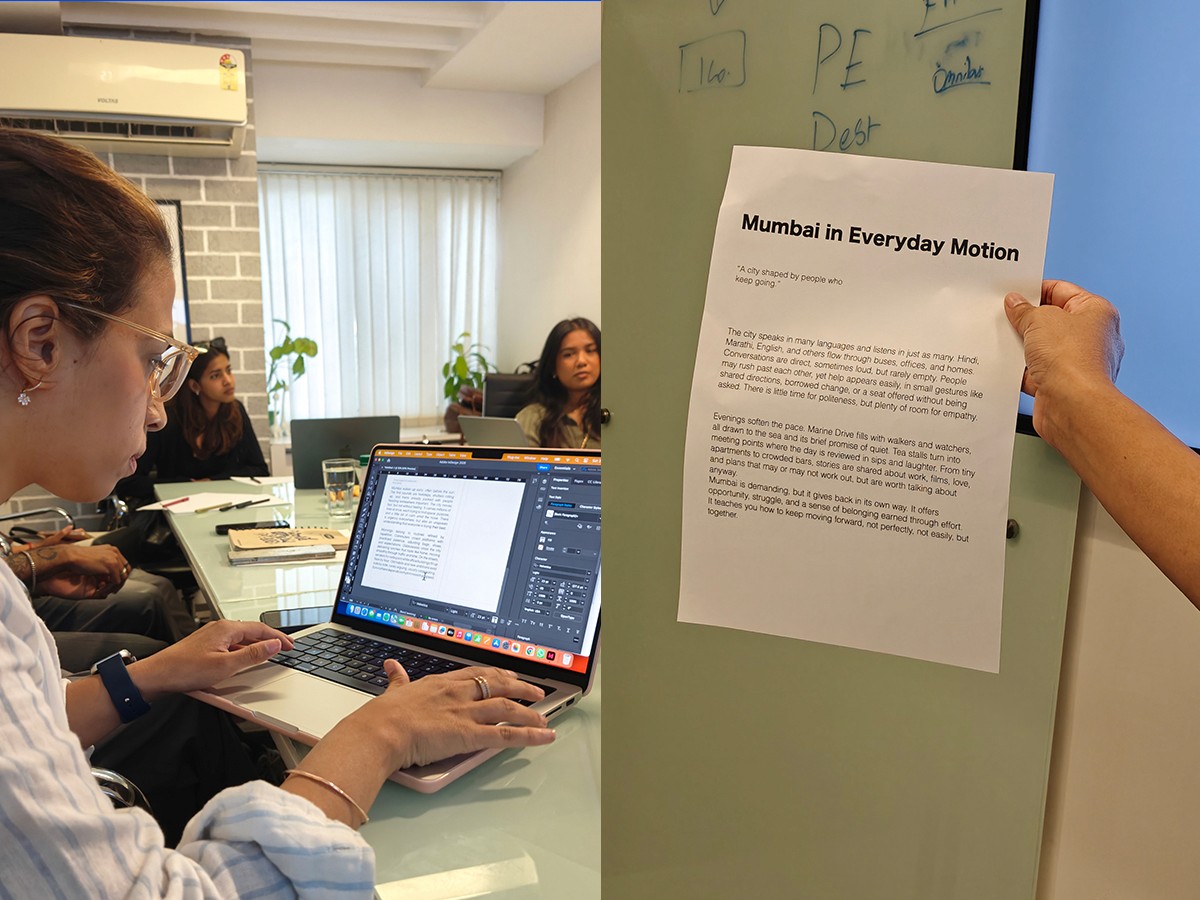
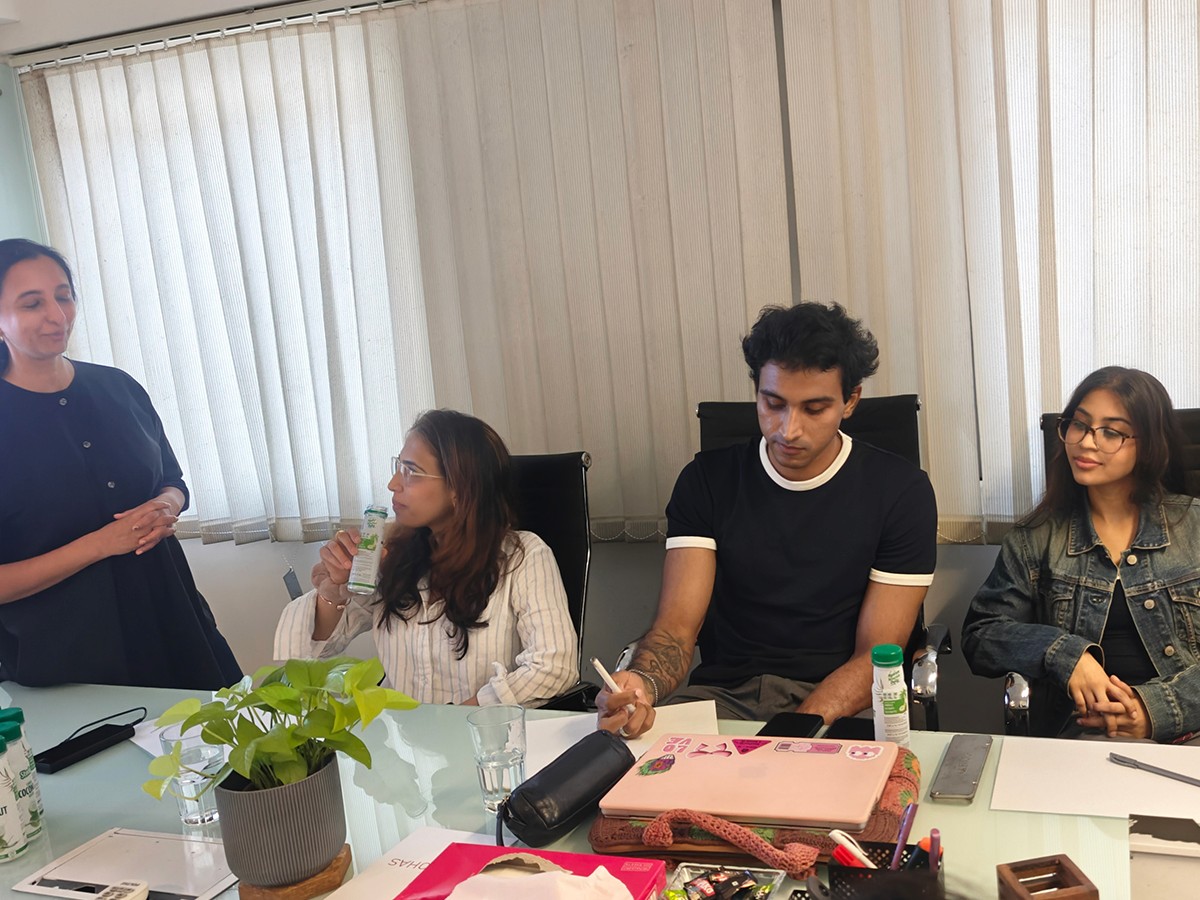
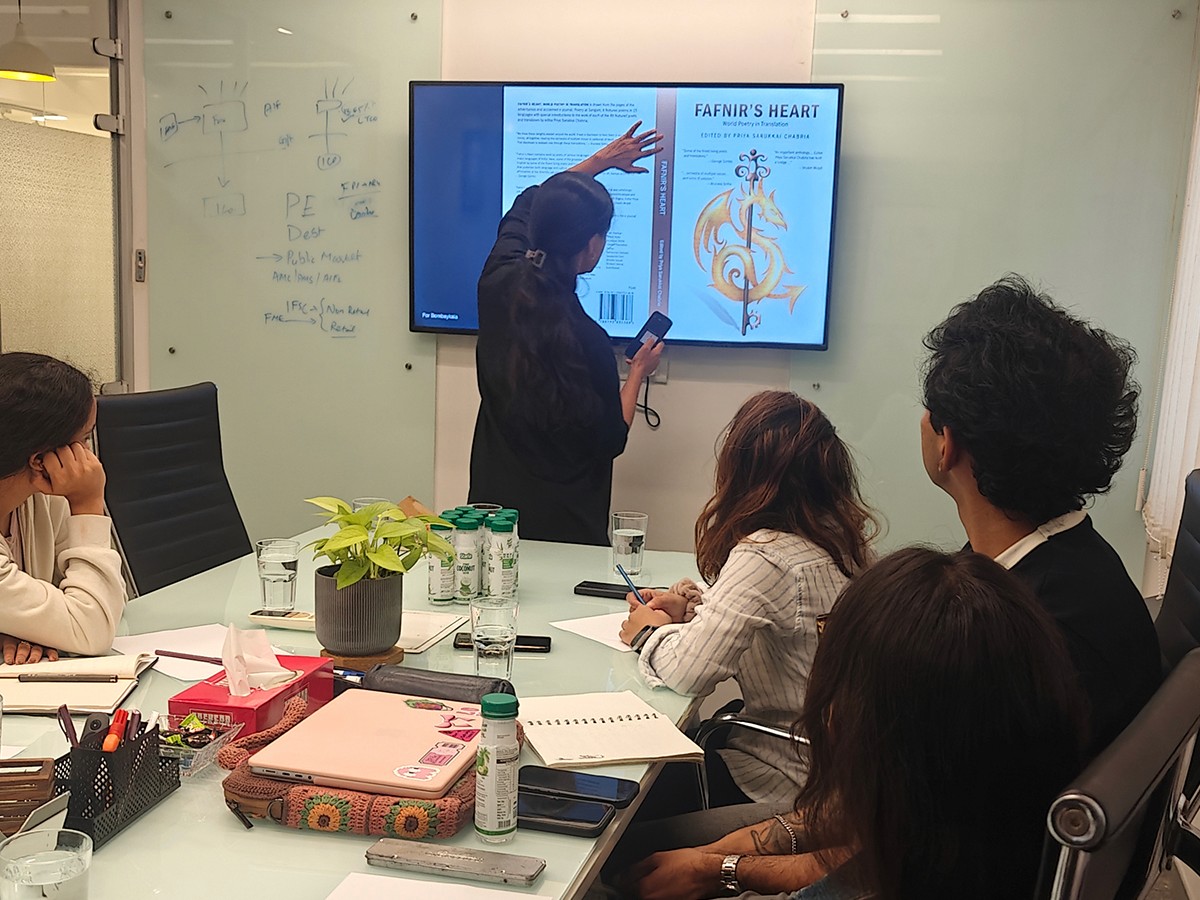
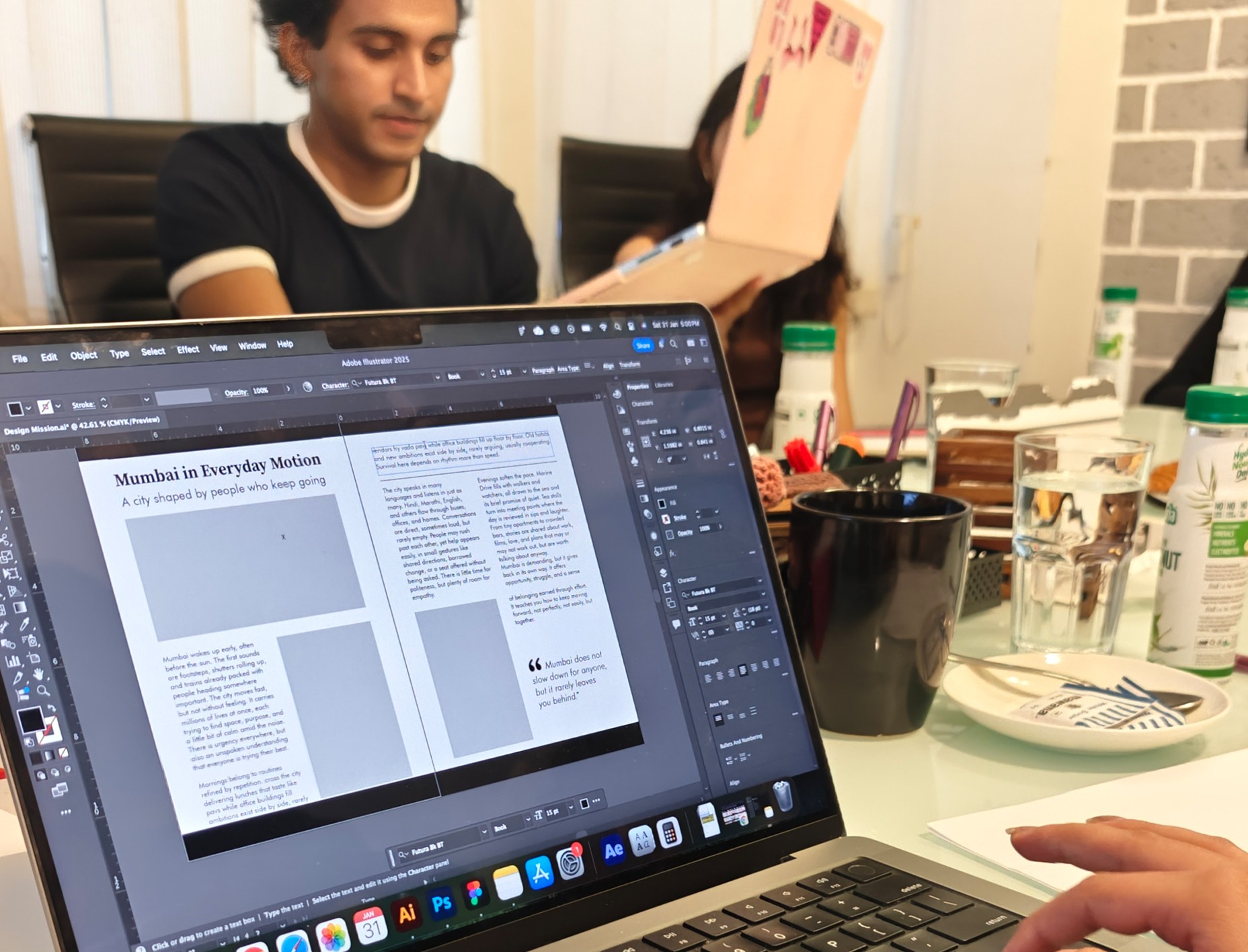
Instead of starting with theory alone, Minal structured the workshop as a live design relay.
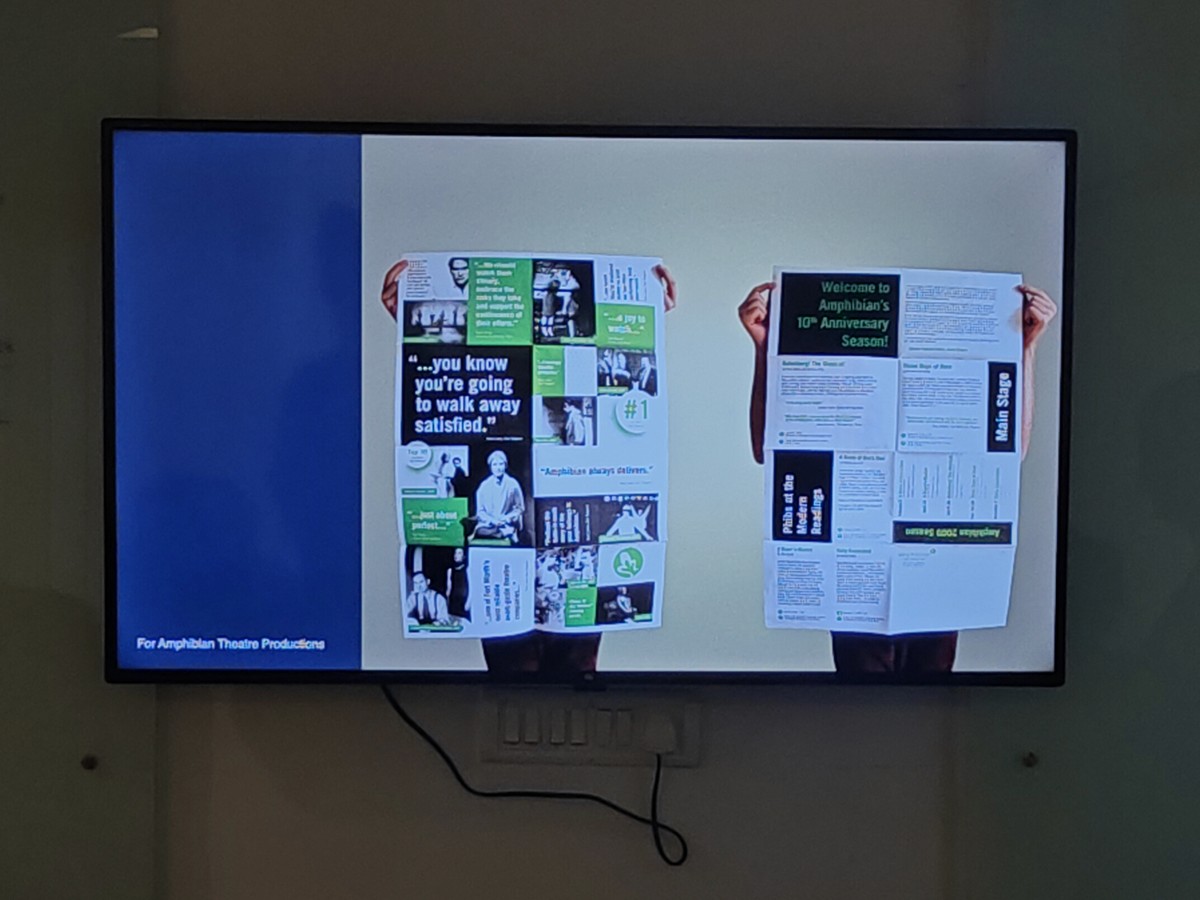
Each participant was assigned one component of an editorial layout—headline, subhead, body text, captions, spacing decisions, or typographic accents. One by one, the spread evolved, with each designer building on what the previous participant had introduced.
This approach shifted type pairing from an abstract decision-making process into a lived, collective exercise in hierarchy, restraint, and visual continuity.
The challenge was simple but demanding: despite multiple hands shaping the layout, the final outcome had to feel like a single, cohesive editorial spread.
Fundamentals of Type Pairing and Hierarchy
As the layout developed, Minal continuously anchored the group back to two essential principles: type pairing fundamentals and hierarchy.
She emphasized that successful type mixing begins with clarity of structure—knowing what leads the eye first, what supports it, and what recedes into the background.
Typefaces were not treated as decorative choices but as functional roles within a system. Each decision had to reinforce clarity, rhythm, and readability while still allowing for personality and contrast.
The exercise made it evident that hierarchy is not something applied at the end of design—it is what shapes every decision from the beginning.
Designing as a Collective System
One of the most valuable outcomes of the relay exercise was the realization that design is often not a solo act—it is a system of decisions that must hold together under varying inputs.
Even with different participants contributing individual parts, the layout succeeded only when each decision respected the overall structure.
This reinforced a key takeaway: good typography is not just about choosing the right fonts, but about maintaining consistency in intent across every layer of design.
Dotting the i’s and Crossing the t’s
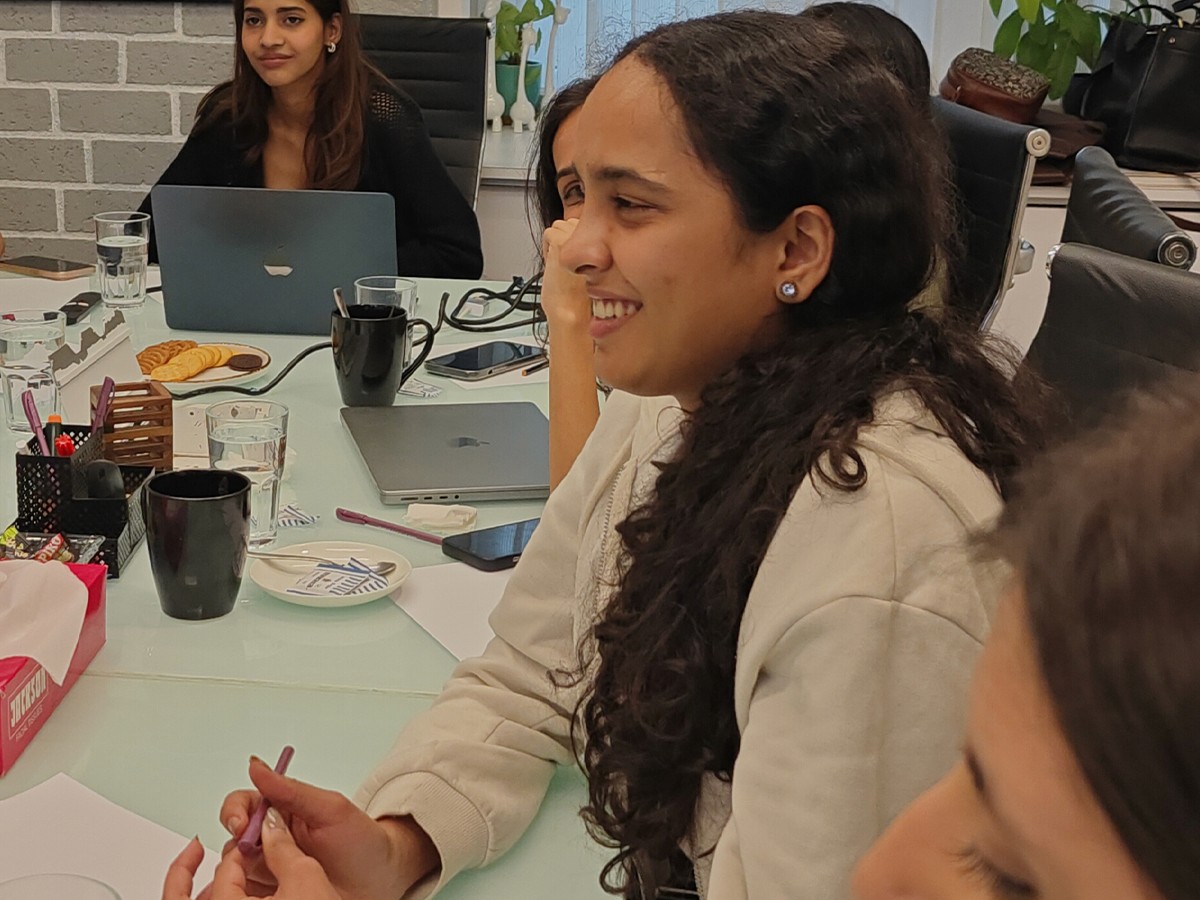
By the end of the workshop, participants left with more than just an understanding of type pairing—they left with an eye trained for detail.
Small inconsistencies in spacing, alignment, and hierarchy that once went unnoticed became immediately visible. The importance of finishing work with precision—of “dotting the i’s and crossing the t’s”—became a lived understanding rather than a passing phrase.
More importantly, participants developed a heightened sensitivity toward typographic balance and editorial rhythm—skills that directly translate into stronger, more refined design practice.
This Studio Saturday session demonstrated that typography is best learned not in isolation, but through structured collaboration and real-time decision-making.
Stay Connected
Keep a close eye on our social media handles for the next Studio Saturday announcements—we’ve got more exciting sessions, fresh perspectives, and hands-on design explorations coming your way. Don’t miss out!